
 April 23, 2026
Where to See Kangaroos Near Brisbane: Real Options & One Smart Day Trip
If you want to know where to see kangaroos near Brisbane, you have two main choices: managed wildlife parks or wild habitats within a 1–2 hour drive. Both are valid, but they deliver very different experiences. This guide lays out the key locations, best times and safety basics, and then shows how a Bribie Island day trip with G’day Adventure Tours combines genuine chances to spot wild kangaroos with 4WD beach access, coastal wetlands, and WWII history. Use it to decide whether you self-drive, visit a park, or book a guided day out from Brisbane.
Most people searching for kangaroos near Brisbane are stuck on one decision: zoo-style certainty or a real wild habitat with no promises. Make that call first. The rest flows from it.
If you want guaranteed close-ups and feeding, go to a wildlife park. If you want kangaroos behaving like wild animals in their own landscape, you need bushland, open grass and some patience. We run tours in those wild environments, so this guide treats both options honestly.
Quick answer: where to see kangaroos near Brisbane
Here are the main places people actually see kangaroos within day-trip range of Brisbane:
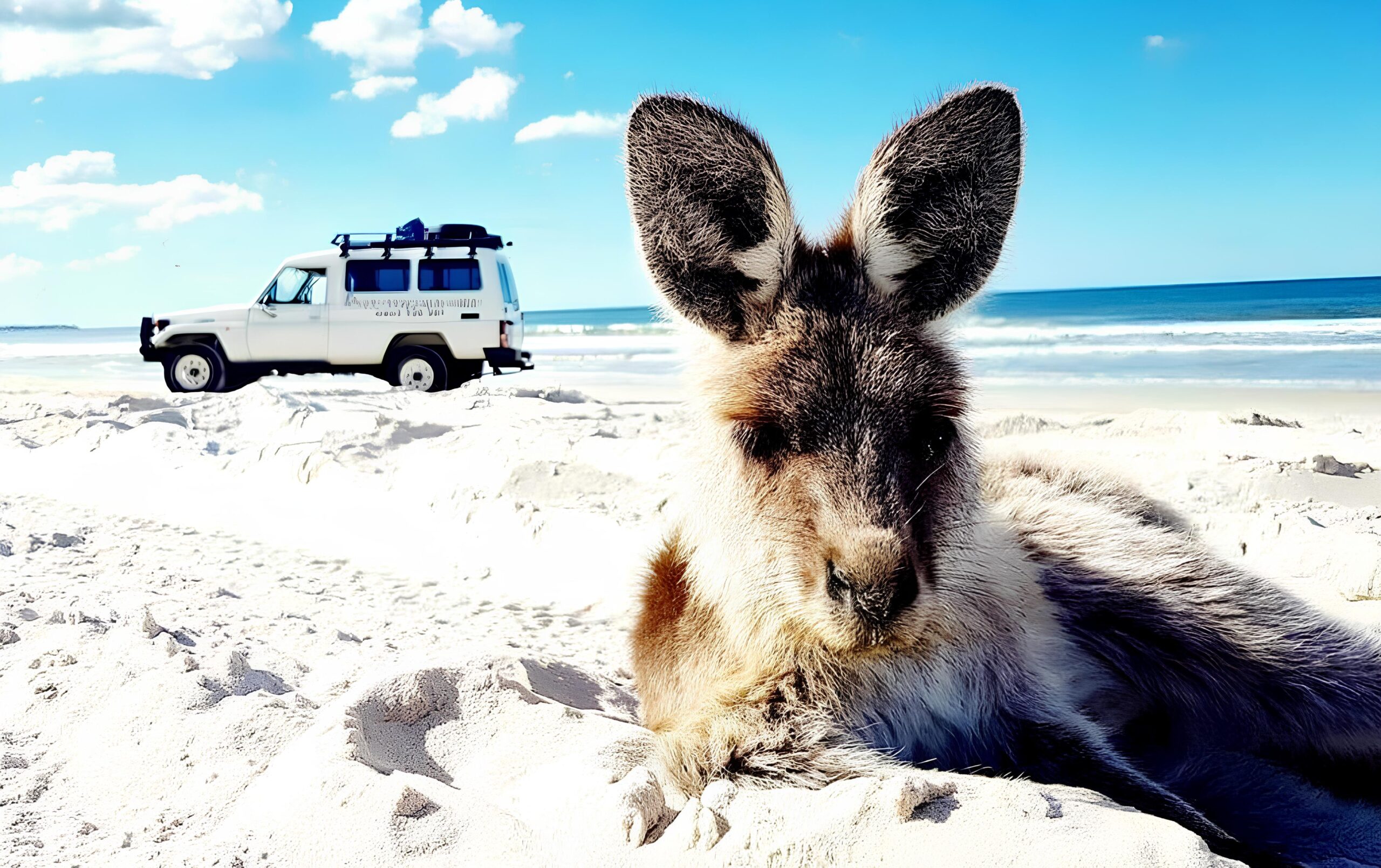
- Bribie Island coastal bush and dunes – Wild kangaroos sometimes seen along inland tracks and dune edges; best done as a guided 4WD and beach day from Brisbane with G’day Adventure Tours.
- North Stradbroke Island (Minjerribah) – Wild kangaroos around Point Lookout and inland bush; ferry required from Cleveland.
- Daisy Hill Conservation Park – Wallabies in the forest and open areas; easy drive south of Brisbane.
- Venman Bushland / Daisy Hill surrounds – Wild wallabies and occasional kangaroos; bushwalk setting.
- Australia Zoo (Beerwah) – Managed encounters and feeding; no wildlife uncertainty.
- Lone Pine Koala Sanctuary (Fig Tree Pocket) – Kangaroo enclosure with close-up interactions; close to Brisbane CBD.
The rest of this article explains where each of these makes sense, then shows when a guided Bribie Island day trip is the better use of your time.
A group steps off the minibus on Bribie Island’s ocean side. There’s no big entrance sign, just a sandy 4WD track cutting through low coastal forest. On one side, dense wallum scrub; on the other, an open patch of grass and banksias. The guide stops the group before the engine shuts off. Everyone expects the beach to be the main event. Then someone notices fresh tracks in the sand beside the grass line, and the guide quietly points out the tell-tale shape: macropod prints heading towards the dunes.
Where to see kangaroos in the wild near Brisbane
Wild means no guarantees. That’s the point. You trade certainty for behaviour that isn’t staged.
Bribie Island – coastal bush, dunes and a smarter day out
Distance from Brisbane: About 70 km north of Brisbane CBD, roughly a 1-hour drive by road to Bribie Island.
Bribie Island has suitable habitat for wild kangaroos and wallabies in its inland bush, dune edges and quieter open areas away from the busiest beach zones. They’re most active around dawn and dusk, especially in cooler months.
From running tours on this stretch of coast for years, we see the same pattern: people who self-drive without local knowledge stay on the wrong roads at the wrong times. They pass straight by the better habitat and then assume there’s “no wildlife here”.
Key points for Bribie:
- Habitat to look for: Open grassy clearings near bush, dune edges with nearby cover, quieter inland tracks rather than the busiest beach entries.
- Best time: Early morning and late afternoon give you the highest chance of activity.
- Access: The crucial areas require 4WD and permits; soft sand and tides dictate timing.
Most visitors get this wrong — and it costs them the best part of the day. They drive across the bridge at midday, sit on the main surf beach, and wonder why they don’t see anything except gulls and other day-trippers.
This is where a guided option like G’day Adventure Tours’ Bribie Island 4WD beach tour changes the equation:
- You’re not driving the 4WD; our guides handle the soft sand and tide windows.
- We use specific access tracks and timing based on tide and light, not guesswork.
- You get a full day: 4WD along the surf beach, WWII bunkers, Pumicestone Passage views, and opportunities to spot koalas, shorebirds and, sometimes, kangaroos or wallabies along the way.
Wildlife is never guaranteed on these tours, and we keep it that way. You’re there to see a whole intact coastal system, not a fenced paddock with a feeding queue.
North Stradbroke Island (Minjerribah)
Distance from Brisbane: Drive to Cleveland (about 30–40 minutes from the CBD), then vehicle or passenger ferry across.
North Stradbroke Island offers good odds of wild kangaroo and wallaby sightings, especially around Point Lookout and inland bush tracks.
- Habitat: Open grass near holiday parks, golf course areas, and bush fringes.
- Best time: Late afternoon is strong here; animals often move into open spaces as the heat drops.
- Trade-off: Logistics are slower than Bribie; you’re adding ferry timings on both ends of the day.
If you’re happy self-driving and managing ferry bookings yourself, Straddie is a solid wild-option alternative. If your priority is a simple, single-vehicle trip from Brisbane with no ferry, Bribie is more efficient.
Daisy Hill Conservation Park and surrounds
Distance from Brisbane: Around 25 km south of the CBD.
Daisy Hill and neighbouring reserves like Venman Bushland National Park have resident wallabies and occasional kangaroos.
- Habitat: Eucalypt forest with open clearings and picnic areas.
- Best time: Early morning and late afternoon on quieter days.
- Access: Standard vehicles are fine; no 4WD needed.
The common approach works, but there’s a better one: don’t treat Daisy Hill as a midday picnic stop. Walk the tracks at first light, then move into the busier areas. Most activity happens before the car parks fill.
Rural edges and golf courses west and north of Brisbane
On the fringes of the city — around Samford Valley, Mount Mee, and semi-rural pockets north and west of Brisbane — locals often see kangaroos or wallabies in paddocks at dawn and dusk.
This is heavily timing-dependent and not purpose-built for visitors. Road safety becomes a real issue around those hours. If you don’t know the roads and are not used to watching for wildlife on the verge, this option is more stress than it’s worth.
Wildlife parks and sanctuaries near Brisbane
If you need guaranteed kangaroos and close-up photos, wildlife parks are the direct answer.
Australia Zoo
Location: Beerwah, on the Sunshine Coast hinterland, north of Brisbane.
Australia Zoo has kangaroos and wallabies in walk-through areas, with opportunities for close viewing and, at times, feeding under staff guidance.
Strong points:
- Reliable sightings and good photo opportunities.
- Educational talks and signage.
- Good fit for families who want structure and facilities.
Trade-offs:
- It’s a full-ticketed day out with crowds.
- You’re not seeing fully wild behaviour in open country.
Lone Pine Koala Sanctuary
Location: Fig Tree Pocket, within Brisbane.
Lone Pine is primarily known for koalas but has a sizable kangaroo and wallaby area.
Best for:
- Visitors with limited time who need a close-to-city option.
- Families with young kids who need short walks and clear facilities.
If your only goal is to stand near a kangaroo today, Lone Pine or Australia Zoo win on efficiency. If your goal is to understand how kangaroos fit into Queensland coastal or bush ecosystems, wild settings or a Bribie Island tour with G’day Adventure Tours deliver more context.
The detail that changes the whole trip
Most people plan their kangaroo outing around the middle of the day because that’s when they’re used to doing activities. That timing works for museums and lunch. It works poorly for macropods.
The detail that changes the whole trip is simple: plan your day around first light or late afternoon, then build everything else around that window.
Do this:
- Lock in your dawn or dusk wildlife window first.
- Put driving, meals and swimming outside that 2–3 hour block.
- Choose locations where being in position at those times is realistic.
On Bribie Island, that might mean starting early with a 4WD beach segment and inland track with G’day Adventure Tours, then using the middle of the day for WWII bunkers, beach time and kayaking in Pumicestone Passage. On a self-drive bush outing, it means walking at first light, not arriving at 10:30am.
The line to remember: if you plan your kangaroo search around your lunch booking, you’ve already cut your chances in half.
Best time and conditions to see kangaroos
Timing is everything on this coastline and in the bush. Get it wrong and you miss the activity entirely.
Time of day
- Dawn: Often the highest activity. Cooler, quieter, fewer people.
- Dusk: Also strong, but you must factor in driving home in low light with animals on the road.
- Midday: Heat and human activity push animals into shade and cover; expect fewer sightings.
Season and weather
- Cooler months (autumn–winter): More comfortable for walking; kangaroos and wallabies are often more active in open areas.
- Hot, bright days: Animals tend to stay in shade; you’ll need to look at edges of cover.
- Rainy periods: Activity patterns can shift, but soft ground makes tracks easier to spot.
We regularly see guests surprised by how “dead” an area looks at midday and how quickly it changes around 4–5pm. Build your day around that swing.
Road and personal safety
- If you plan self-drive dawn or dusk trips, keep speed down on rural and island roads.
- Scan verges constantly; kangaroos often move unpredictably.
- Never swerve sharply to avoid an animal; controlled braking is safer.
Joining a guided day such as G’day Adventure Tours’ Bribie Island trips means you’re not the one managing low-light coastal driving or reading soft-sand conditions around tide.
Of all the day trips available from Brisbane, a well-timed Bribie Island tour consistently produces the best guest satisfaction for combining genuine wildlife opportunities, 4WD beach access and low-stress logistics in a single day — and the gap with generic self-drive beach runs is significant.
A Brisbane family steps off the G’day Adventure Tours vehicle at the end of the day, kids still sandy from a paddle in Pumicestone Passage. In the morning they’d asked if the kangaroos were “in a paddock somewhere”. By late afternoon they’re talking about the difference between tracks in soft sand and the heavier prints near the dune grass where they’d paused earlier. They may not have ticked off every animal on their list, but they leave repeating details about the bunkers, the 4WD beach run, and that quiet moment watching the treeline together.
How to see kangaroos without a car: guided options
If you don’t have a car in Brisbane, or you don’t want to deal with 4WD access, guided tours do the heavy lifting.
Bribie Island 4WD & wildlife with G’day Adventure Tours
G’day Adventure Tours runs small-group Bribie Island trips that depart from the Brisbane region and focus on three things:
- 4WD beach and bush access – You sit back; our guides handle permits, tides and soft sand.
- Wildlife opportunities – Coastal bush and wetlands with chances to spot kangaroos, wallabies, dolphins, sea turtles, birdlife and, at times, koalas.
- Layered day out – WWII bunkers, local stories, beach time and often kayaking in sheltered Pumicestone Passage.
Every season we notice the same pattern with first-time visitors: they arrive thinking it’s a simple “see kangaroos” mission and leave talking about how all the parts of the day fit together — history, coastline, wildlife and logistics. That integrated structure is what makes a guided day from Brisbane worth the extra cost over a basic self-drive.
When a wildlife park wins instead
If you:
- Have very young children with limited patience.
- Only have half a day available.
- Need guaranteed close-up kangaroo photos.
…then a wildlife park like Lone Pine or Australia Zoo is the better call. There’s no point paying for a full coastal tour if your only non-negotiable is hand-feeding a kangaroo.
Kangaroo safety, etiquette and photography
This part matters. Poor behaviour around kangaroos causes injuries and stress.
Distance and behaviour
- Keep a safe distance; use your camera’s zoom instead of stepping closer.
- Never try to pat, corner or block a kangaroo or wallaby.
- Watch body language: upright posture, paw boxing or tail bracing are warning signs. Back away calmly.
Feeding
- Do not feed wild kangaroos, on Bribie or anywhere else.
- In parks, only use approved food in designated areas and follow staff instructions.
Photography
- Turn off flash at dawn and dusk.
- Stay low and quiet; sudden movements push animals away.
- Don’t trample vegetation or dune edges to get closer.
On G’day Adventure Tours’ Bribie trips, guides set the viewing distance and explain behaviour in real-time. That single layer of interpretation stops a lot of the mistakes we see when people wander up on their own.
Sample day-trip setups from Brisbane
Most people don’t need more locations. They need a cleaner plan. Here are two straightforward patterns that work.
Option 1: Guided Bribie Island day with wildlife focus
- Early departure from Brisbane to hit Bribie Island with the right tide window.
- 4WD beach run and coastal bush access with G’day Adventure Tours, including WWII bunkers and local history.
- Wildlife opportunities along inland tracks, dune edges and Pumicestone Passage.
- Midday downtime for beach, swimming or kayaking, when wildlife activity naturally dips.
- Afternoon return with no stress about sand or traffic.
For most visitors wanting a full-value day that includes both potential kangaroo sightings and broader experiences, this is the better structure than trying to chain multiple separate stops together in your own car.
Option 2: Self-drive bush morning + city afternoon
- Pre-dawn drive from Brisbane to Daisy Hill or Venman Bushland.
- Walk key tracks at first light, then use picnic areas once activity drops.
- Head back to Brisbane by late morning.
- Spend the afternoon at a city attraction or along the river.
This works well if you have a car, want to keep costs down, and are comfortable managing your own timing and navigation.
Conclusion: choosing the right way to see kangaroos near Brisbane
There’s no single “best place” to see kangaroos near Brisbane. There’s only the best setup for your constraints.
- If you want guaranteed close-ups and short travel, go to Lone Pine or Australia Zoo.
- If you want wild behaviour in natural habitat and you’re prepared for no promises, target bush reserves, islands and coastal landscapes at dawn or dusk.
- If you want that wild setting plus 4WD beach access, WWII history, kayaking and expert local guidance in one day from Brisbane, book a Bribie Island tour with G’day Adventure Tours.
Check tour availability and book your Bribie Island adventure with G’day Adventure Tours once you’ve decided that a well-structured, low-stress day out beats driving random backroads hoping a kangaroo appears.
Frequently Asked Questions
Where can I see kangaroos in the wild near Brisbane?
Realistic wild options near Brisbane include Bribie Island’s coastal bush and dunes, North Stradbroke Island (Minjerribah), and bush reserves like Daisy Hill Conservation Park and Venman Bushland. All offer natural habitat, but none can guarantee sightings. Bribie Island, accessed on a guided 4WD beach tour with G’day Adventure Tours, is a strong choice if you want a full coastal day out with genuine wildlife opportunities plus history and beach time.
How far from Brisbane do I need to go to see kangaroos?
You don’t need to go far. Daisy Hill Conservation Park is around 25 km south of the CBD. Bribie Island is about 70 km north, roughly a 1-hour drive. North Stradbroke Island requires extra ferry time from Cleveland. Rural edges around the city also have kangaroos and wallabies, but they’re less predictable and involve more dawn/dusk driving, which carries higher road risk if you’re not used to local conditions.
Can I see kangaroos on the beach near Brisbane?
Kangaroos and wallabies are sometimes seen near coastal dune systems and open areas close to beaches, including on islands like Bribie. However, sightings are never guaranteed and usually occur around dawn or dusk when fewer people are around. On Bribie Island, G’day Adventure Tours uses 4WD access and local knowledge to move through dune edges and bush tracks where wildlife may be active, but the tours focus on the whole coastal environment, not just a single animal.
Do I need a tour to see kangaroos near Brisbane?
You don’t strictly need a tour. With a car and good timing, you can visit places like Daisy Hill, Venman Bushland or North Stradbroke Island yourself. A tour becomes the better option when you don’t have a vehicle, don’t want to manage 4WD permits and tides, or want layered context. G’day Adventure Tours’ Bribie Island trips handle logistics, soft-sand driving and timing, while also covering wildlife, WWII history and coastal highlights in one structured day.
Is it safe to approach or feed kangaroos?
No. You should not approach or feed wild kangaroos near Brisbane or anywhere else. Keep a safe distance, watch their body language and never corner or touch them. Feeding can cause health problems and aggressive behaviour. In wildlife parks, only feed animals in designated areas with approved food, and follow staff directions. On guided tours such as those run by G’day Adventure Tours, your guide sets viewing distances and explains how to watch respectfully without causing stress or risk.
Ready to turn a simple kangaroo wish into a well-planned coastal day out? Check current availability and book your Bribie Island 4WD beach and wildlife tour with G’day Adventure Tours via gdayadventuretours.com.